What Is a Meme Coin and Why It Is the Riskiest Bet in Crypto
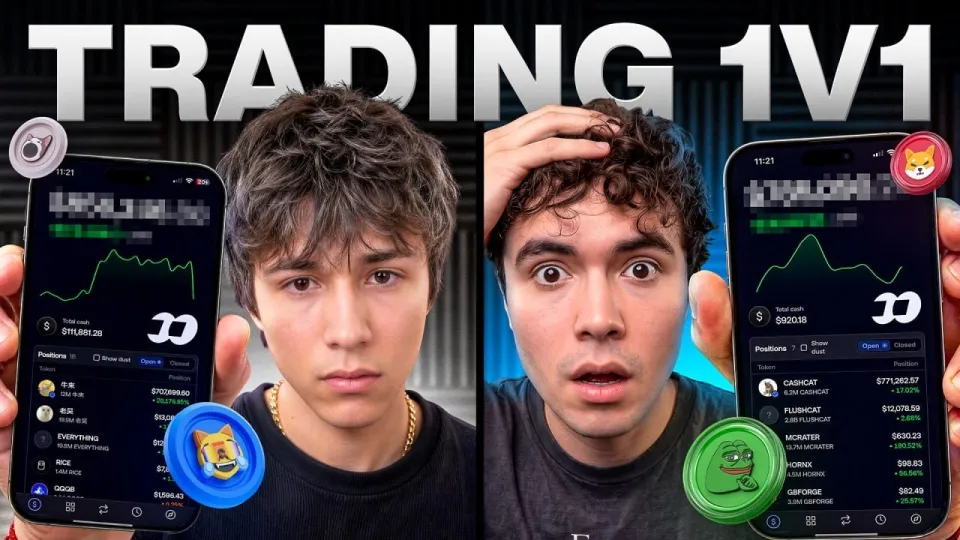
Video: I Challenged A Pro Memecoin Trader (Who Won?)
You can order the same kind of articles for your own video to boost it on YouTube and Google. Just message the Telegram bot @sat_sit_bot. The bot writes and publishes the articles itself (with your YouTube video embedded) on popular topical websites (no ads). Try it free: 50 articles on us.
· based on the channel insentos
Key takeaways
- A meme coin is a cryptocurrency with no underlying product or cash flow, priced purely on attention and community.
- Most meme coin trading happens on Solana, where tokens launch in minutes and liquidity can vanish just as fast.
- In the insentos challenge video, a guest trader emphasized explaining the thought process live, not just showing profits.
- Viewers noted that such videos often end in losses, which reflects the gambling-like nature of the niche.
- Tools like Axiom and FOMO.Family are used for fast execution and copy-trading, but they do not remove the risk.
A meme coin is a cryptocurrency whose value comes from internet culture, community hype and attention rather than from a product, revenue or cash flow. It is the riskiest segment of crypto trading: prices can multiply in minutes and collapse just as fast. If you are looking for a short answer, a meme coin is a pure attention asset — and that is exactly why trading it requires a system, not intuition.
In the insentos video “I Challenged A Pro Memecoin Trader (Who Won?)”, the host trades live with a guest and gives advice along the way. The main takeaway from the format is that execution speed and risk control matter more than picking the “right” coin. The video also points viewers to FOMO.Family for registration and copy-trading tools and to Axiom for fast on-chain execution.
What a meme coin actually is and how it differs from other crypto
A meme coin has no fundamental valuation model, so the usual metrics — earnings, cash flow, TVL — do not apply. Instead, traders watch liquidity, holder distribution, social momentum and the behavior of the deployer. This is why meme coins are often described as gambling-adjacent: the outcome depends on crowd psychology more than on technology.
Key differences from “serious” crypto assets:
- No cash flow or product — price is driven by narrative and community.
- Extremely low barriers to launch — on Solana, a new token can be created in minutes.
- High volatility — double-digit percentage moves in seconds are normal.
- Liquidity risk — a pool can be drained or pulled, leaving holders unable to exit.
- Short life cycles — most tokens fade within days or hours.
How meme coin trading works on Solana
Solana became the center of meme coin trading because of low fees and fast confirmation times. A typical workflow looks like this:
- A token launches on a launchpad or directly into a liquidity pool.
- Early buyers enter within the first seconds or minutes.
- Social channels amplify the narrative, attracting more buyers.
- Early holders take profit, and liquidity may thin out quickly.
The insentos challenge shows this live: the guest trader keeps explaining his reasoning even while managing open positions. That detail matters — a pro approach is not about hiding the process but about making decisions explicit: why enter, where to take profit, and where to cut a loss.
Why most meme coin traders lose money
Most meme coin traders lose because they treat a probabilistic game as a certainty. The niche rewards speed and discipline, and punishes hesitation and oversized bets. Viewer reactions to the challenge video reflect this: several comments noted that similar videos often end in losses, and that results can look easier for traders with an audience.
Common failure points:
- Entering after the move has already happened, when liquidity is thin.
- Betting too much on a single token instead of sizing positions.
- No predefined exit plan for both profit and loss.
- Ignoring holder concentration and deployer history.
- Copying trades without understanding the thesis behind them.
A realistic approach is to treat every meme coin trade as a calculated bet with a fixed maximum loss, not as an investment.
What a pro memecoin trader does differently
A professional meme coin trader focuses on process rather than prediction. In the insentos video, the guest’s willingness to narrate his thought process while trading is the most instructive part: it turns a fast-paced session into a repeatable framework.
A workable checklist looks like this:
- Screen for liquidity and holder distribution before entering.
- Define position size in advance — a fixed percentage of the portfolio.
- Set a profit target and a hard stop before the trade begins.
- Scale out rather than trying to sell the exact top.
- Review each session and note which decisions were process-driven and which were emotional.
Tools such as Axiom are used for fast execution, and platforms like FOMO.Family offer copy-trading and community features. Neither replaces risk management — they only reduce friction.
Common questions from new meme coin traders
New traders often ask whether meme coin trading can be learned from videos, and the honest answer is yes, but only as a starting point. Watching a live session helps you see how decisions are made under pressure, which is hard to convey in a static guide. However, the viewer comments on the insentos challenge highlight a real gap: many people want access to communities and groups but find them hard to join. That is a legitimate concern — a community is useful only if it explains the reasoning behind trades, not just the tickers.
Another frequent doubt is whether results in such videos are representative. They are not: a single session is a sample, not a track record. Treat every live trading video as a demonstration of method, and judge the method by whether it includes position sizing, stop-losses and honest discussion of losses.
Useful links
- FOMO.Family — registration and copy-trading tools
- Axiom — on-chain trading terminal
- insentos on X
- insentos on Instagram
- insentos on TikTok
Bottom line
A meme coin is an attention-driven asset, and trading it is closer to disciplined speculation than to investing. The insentos challenge video is useful precisely because it shows the process live: entries, exits and reasoning in real time, rather than a highlight reel of profits. If you take one lesson from it, make it position sizing and a predefined exit plan. You can start with the FOMO.Family registration link and follow the channel insentos for more live trading breakdowns.
Source: I Challenged A Pro Memecoin Trader (Who Won?) · Markdown version
Questions & answers
Can you really learn meme coin trading from YouTube videos?
Yes, but only as a starting point. Live sessions show how decisions are made under pressure, which static guides cannot replicate. You still need to practice with small position sizes and track your own results.
Why do so many meme coin trading videos end in losses?
Because meme coins are highly volatile and most outcomes depend on timing and liquidity. A single session is a small sample, and losses are a normal part of the process even for experienced traders.
What tools do meme coin traders use on Solana?
Traders typically use fast execution terminals like Axiom and community or copy-trading platforms like FOMO.Family. These tools reduce friction but do not remove the underlying risk.
Is meme coin trading the same as gambling?
It has gambling-like characteristics because outcomes depend heavily on crowd behavior and luck. The difference is that a disciplined trader uses fixed position sizing, stop-losses and a repeatable process.