5 Things Crypto Investors Need to Know About the Market Crash
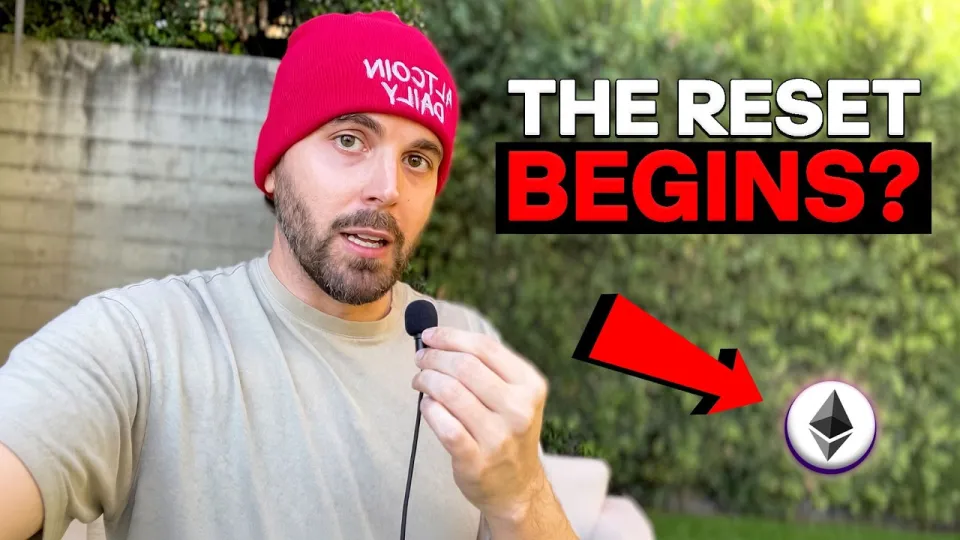
Video: Crypto Investors Are In Serious Trouble (market crash)
You can order the same kind of articles for your own video to boost it on YouTube and Google. Just message the Telegram bot @sat_sit_bot. The bot writes and publishes the articles itself (with your YouTube video embedded) on popular topical websites (no ads). Try it free: 50 articles on us.
· based on the channel Altcoin Daily
Key takeaways
- Bitcoin traded around $80,707 on October 24, 2026, with a five-year CAGR of just 5.78%, per a widely shared figure in the comments.
- The Altcoin Daily breakdown frames the selloff as a sentiment and positioning problem rather than a sudden collapse of crypto fundamentals.
- Long-term holders describe the drawdown as an averaging-down window; short-term traders are the group most exposed to forced selling.
- The video's only official link is the Altcoin Daily merch shop, not a trading platform or investment product.
- Viewers are openly split on whether the cycle still delivers new highs, with questions about ETH lagging BTC and SOL targets such as $1,000 by 2028.
A crypto market crash is a sharp, correlated drop across Bitcoin, Ethereum and altcoins, usually driven by forced liquidations and a collapse in sentiment rather than by a single piece of news. In the current selloff, Bitcoin has been trading near $80,707, and one widely circulated calculation puts its five-year compound annual growth rate at just 5.78% — a return that undercuts the "digital gold" pitch and explains why so many holders feel trapped. The practical answer for most investors is to separate long-term allocation decisions from short-term price reaction, and to treat official merchandise and community links such as the Altcoin Daily shop as what they are: branded products, not investment products.
What is actually crashing in this crypto market cycle
The crash is less about a single token and more about the structure of the market — leverage, concentration and expectations. The Altcoin Daily breakdown treats the move as a broad de-risking event: Bitcoin makes the headlines, but the pain is concentrated in altcoins that were priced for a cycle that has not arrived on schedule. When BTC falls, correlations go to one, and coins with thinner liquidity fall harder and recover slower.
A key detail from the discussion is that Bitcoin's long-term return profile has deteriorated relative to earlier cycles. A 5.78% five-year CAGR is roughly what an investor could have earned in far less volatile assets, which is exactly the argument critics now use against the "just hold" thesis. That does not invalidate the asset, but it does mean the opportunity cost of holding through a deep drawdown is real and should be part of any honest portfolio review.
How long-term holders are responding to the drawdown
The dominant behavior among committed holders is not panic selling but deliberate inaction, followed by selective buying. Several viewers describe not logging in for weeks, keeping positions untouched and saving cash for other priorities — a form of self-imposed discipline that protects against emotional decisions at the worst moment.
A workable framework looks like this:
- Set a fixed allocation to crypto as a percentage of net worth and rebalance only when it drifts far from target.
- Keep a cash reserve outside the market so a drawdown becomes an opportunity rather than a crisis.
- Buy in tranches during declines instead of trying to catch the exact bottom.
- Avoid checking prices daily; review the thesis quarterly, not hourly.
- Write down the reason for each position before buying, so you can tell a broken thesis from a bad week.
The phrase that keeps appearing in the discussion is "average down" — adding to positions at lower prices to reduce the average entry. It works only if the asset survives and the position size stays within risk limits.
Typical questions from crypto investors during a crash
Most of the uncertainty voiced around this selloff falls into a few recurring themes, and each has a concrete way to think about it.
- Is this manipulation or a real bear market? Some viewers insist the move is ordinary market manipulation; others treat it as a genuine cycle shift. The honest answer is that both can be true — large players do move thin markets, and fundamentals do reprice. Position sizing is the only defense that works in either case.
- Will altcoins ever repeat their old highs? Ethereum has lagged Bitcoin in this cycle, and that gap is the most-asked structural question. A coin returning to its previous high requires new capital inflows, not just recovered sentiment.
- What price targets are realistic? Targets like $1,000 SOL by 2028 circulate widely, but they are scenarios, not forecasts. Treat any single number as a hypothesis and size positions so being wrong is survivable.
- Should I be buying stocks instead? Some holders are redirecting cash toward personal comfort and non-crypto assets. Diversification outside crypto is a legitimate response to a 5.78% five-year CAGR.
- What does a treasury company do if its crypto position falls? Questions about large corporate ETH holders selling are really questions about forced sellers — and forced sellers are what turn a correction into a crash.
Where the real risks sit in a market crash
The biggest losses in a crash rarely come from the asset itself; they come from leverage and from decisions made under pressure. A spot position can fall 50% and recover. A leveraged position can be liquidated at the bottom and never participate in the rebound.
Three risks deserve explicit attention. First, liquidation cascades: when collateral is sold automatically, prices overshoot below fair value. Second, counterparty risk: exchanges, lenders and yield products can fail precisely when users need access to funds. Third, behavioral risk: selling at the point of maximum fear locks in the loss that a plan was supposed to prevent. Keeping coins in self-custody, avoiding borrowed money and holding a cash buffer addresses all three.
How to position a crypto portfolio after a crash
After a crash, the goal is not to predict the bottom but to make sure the portfolio can survive one. Start by auditing what you own: the number of positions, the share of altcoins versus Bitcoin, and whether any position is large enough to threaten your financial plan if it goes to zero.
Then decide on a buying schedule. A simple approach is to split available capital into equal monthly tranches over six to twelve months, buying the same basket each time. This removes the need to time the market and prevents a single purchase from defining your average cost. Finally, define an exit rule in advance — a rebalancing threshold, a target allocation, or a milestone — so that a future rally has a plan attached to it rather than a feeling.
Official links from the Altcoin Daily breakdown
The only official link shared alongside the video is the channel's merchandise store:
- Altcoin Daily merch shop — branded apparel and accessories from the channel.
No trading platform, token sale or investment product is promoted through that link, which matters when judging the intent behind crash coverage.
Summary
The crypto market crash is best understood as a stress test of positioning and patience rather than a verdict on the technology. Bitcoin near $80,707 and a five-year CAGR of 5.78% are uncomfortable numbers, but they are arguments for disciplined allocation, not for panic selling at the low. Long-term holders are averaging down selectively, keeping cash ready and avoiding leverage, while short-term traders carry the liquidation risk. For a full walkthrough of the sentiment and the cycle debate, watch the breakdown from the Altcoin Daily channel, and if you want to support the show, the Altcoin Daily shop is the official place to do it.
Source: Crypto Investors Are In Serious Trouble (market crash) · Markdown version
Questions & answers
Is the crypto market crash a good time to buy?
A decline improves long-term expected returns for anyone who was going to hold anyway, but only if the position is affordable and unleveraged. Buying in fixed tranches over several months reduces the risk of committing everything near a local low. Keep a cash reserve so further declines are an option rather than a threat.
Why has Bitcoin's five-year return been so weak?
A five-year CAGR of about 5.78% with Bitcoin near $80,707 reflects a strong starting point five years ago and a long consolidation since. Returns measured from a cycle peak always look poor during a drawdown. The number is a reminder to judge crypto against a diversified portfolio, not against its own best years.
Should I sell my altcoins during a crash?
Selling after a large drop converts a temporary loss into a permanent one, so the decision should rest on the original thesis rather than the price. If a project's fundamentals or team have deteriorated, exiting is reasonable; if only sentiment has changed, reducing position size is usually better than a full exit. Avoid decisions made in the first hours of a sharp move.
What is the Altcoin Daily merch link?
The channel's official store is at https://altcoindailyshop.myshopify.com and sells branded apparel and accessories. It is a merchandise shop, not a trading platform, so no funds or personal trading accounts are involved. Treat any other link claiming to be official with caution.